Writing
Frameworks on EHS software selection, data architecture, and AI in safety work.
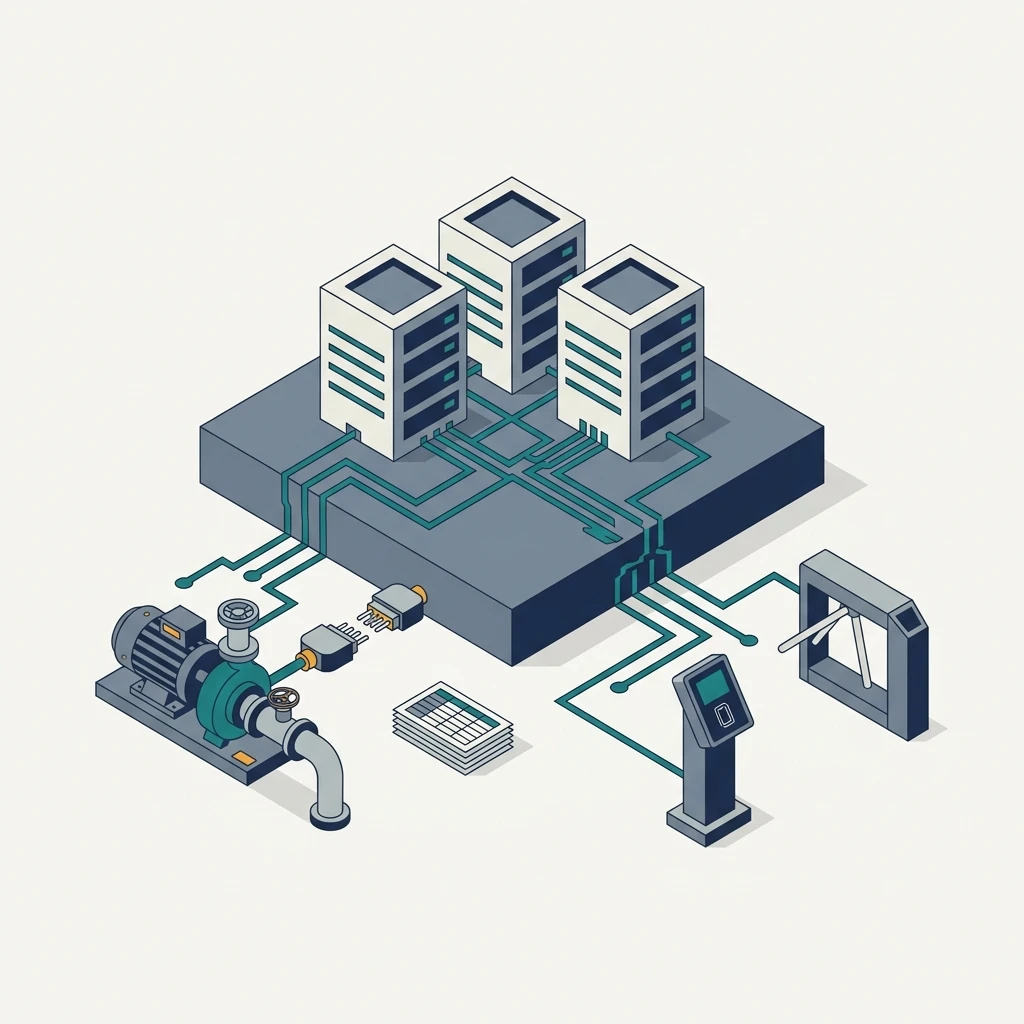
Why an All-in-One EHS Platform Still Leaves Your Safety Records Disconnected from Operations
An all-in-one EHS suite connects internal safety records at best. Four ways vendors price outside connections, why scheduled nightly file exports fail on site, and the terms to require before signing.
Read →What EHS Software Go-Live Does to Your Legacy Safety Records
At go-live, the cut-off date leaves old safety records in boxes or attached files, and the mapping alters the ones it loads. What each decision costs later, and when to find the original versus recover it into fields.

A Recovered Safety Record Can Count Wrong and Look Right
Records read from old cards or mapped from exports carry errors that look like valid entries. Split the audit by form version, verify your search against a hand-transcribed sample, and mark every recovered record.

An Escalation Email Is Not an Escalation
Overdue rules email up the assignee's reporting chain while the action waits on a purchase order nobody was asked to approve. How to specify escalations that force a decision.

Why Health Surveillance Breaks When Software Re-Scores the Past
In a platform that scores tests each time a screen loads, one edit to a reference table re-scores every past test. Four rules that keep reviewed results fixed, and a test for yours.

The Assumptions List Is the Real Implementation Plan
Every line in a proposal's assumptions list is work your team owes on the vendor's dates, with no hours budgeted. A miss can become a change order, or a category list nobody tested on site.

EHS Software Implementation: What Each Phase Does to Your Records
Each phase of an EHS software implementation decides something about your records that its deliverables list does not show. What each one decides, and what to check before you sign it.

How EHS Software Pricing Scales — and What Each Model Rewards
Ten ways an EHS software bill grows, what each makes it cheaper to leave out of your safety records, and the terms to ask for before the price is agreed.
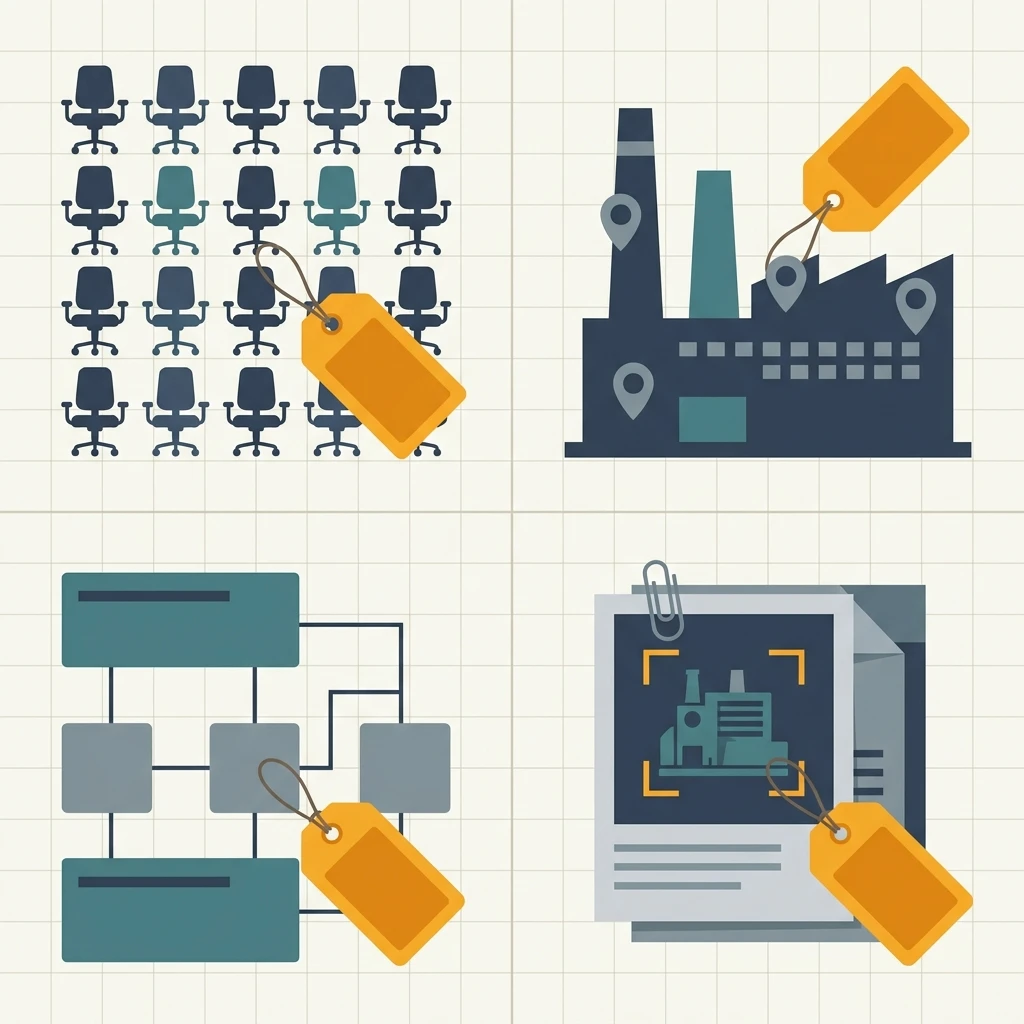
Module Pricing Decides Which Records Connect
Skip a module and its records move to spreadsheets the platform cannot link to. Four questions to ask before you cut one, and why phasing by site beats phasing by module.

The Safety Record Moved Three Times. AI Gave It a New Writer.
Paper had first-hand notes. Spreadsheets had filters. Platforms had dashboards. AI gives the safety record a new writer—and leaves the check to an approver who cannot verify it.
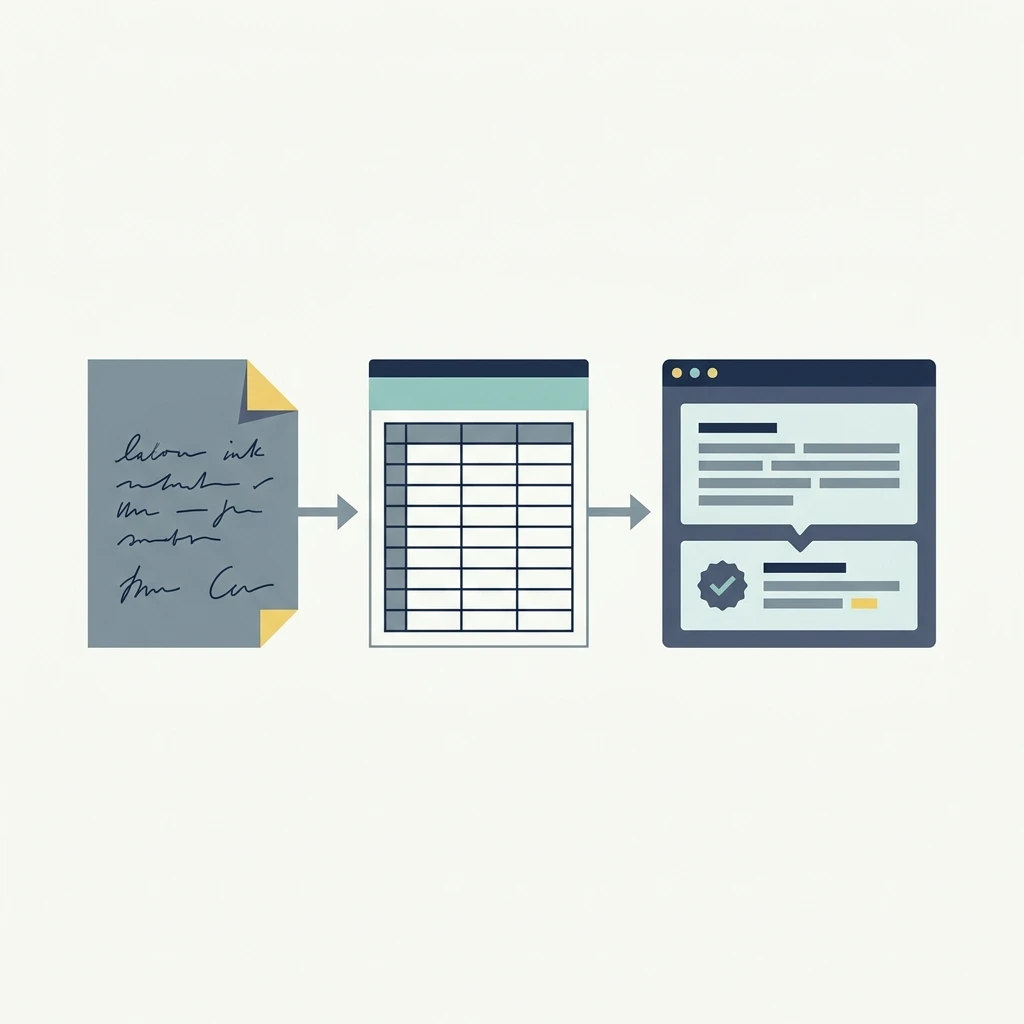
Your Permit System Files Documents. The Hazard Sits on the Equipment.
The permit that said pump A had no relief valve was filed one level up. Two rules for permit software: key every record to the equipment, and never rewrite it.
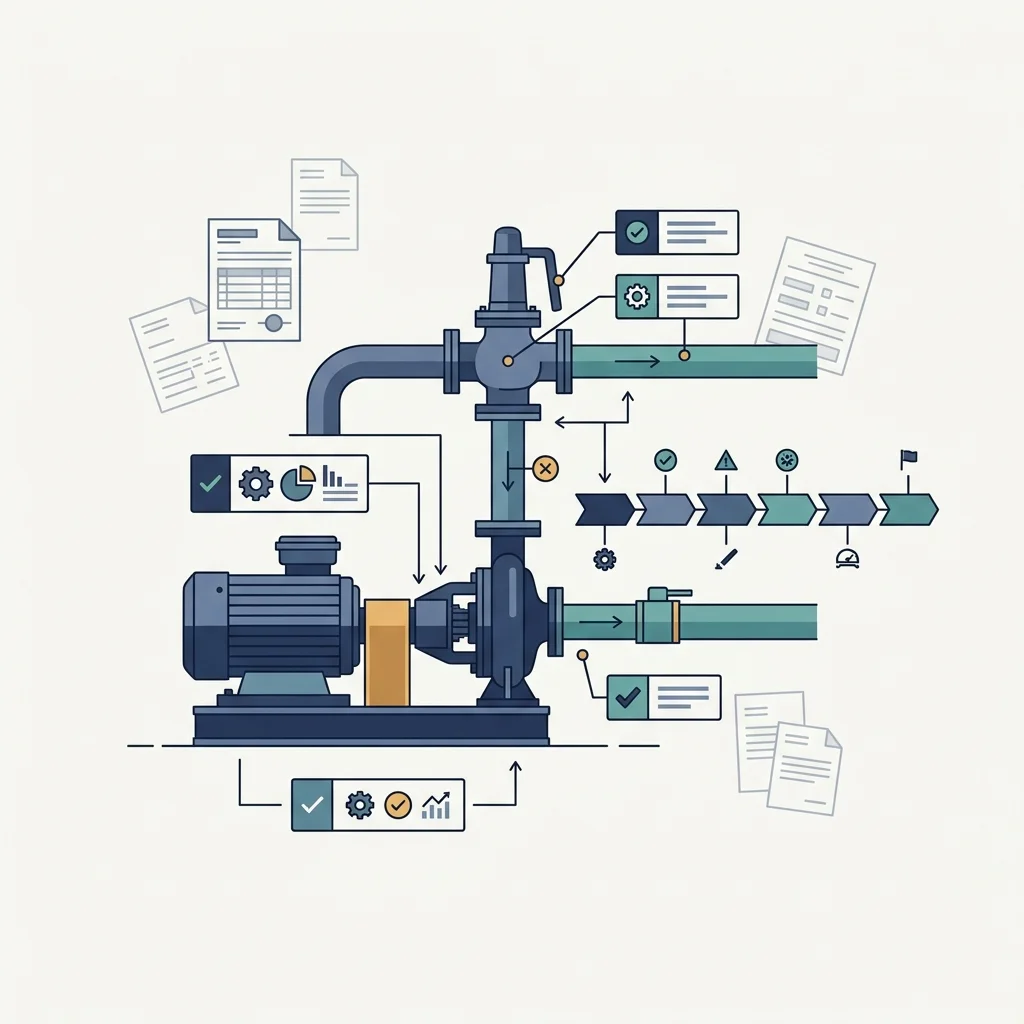
Frontline Safety Apps: Why the Mobile Keyboard Fails
Forcing crews to type in gloves corrupts hazard records with junk text. How to design keyboard-free mobile safety forms that work.

Time-Series Cross-Correlation in Safety Analytics: Proving When Leading Indicators Actually Lead
Monthly safety scorecards aggregate daily latency into Lag 0. A reproducible daily time-series pipeline using cross-correlation and Granger causality to prove when barrier audits actively lead.
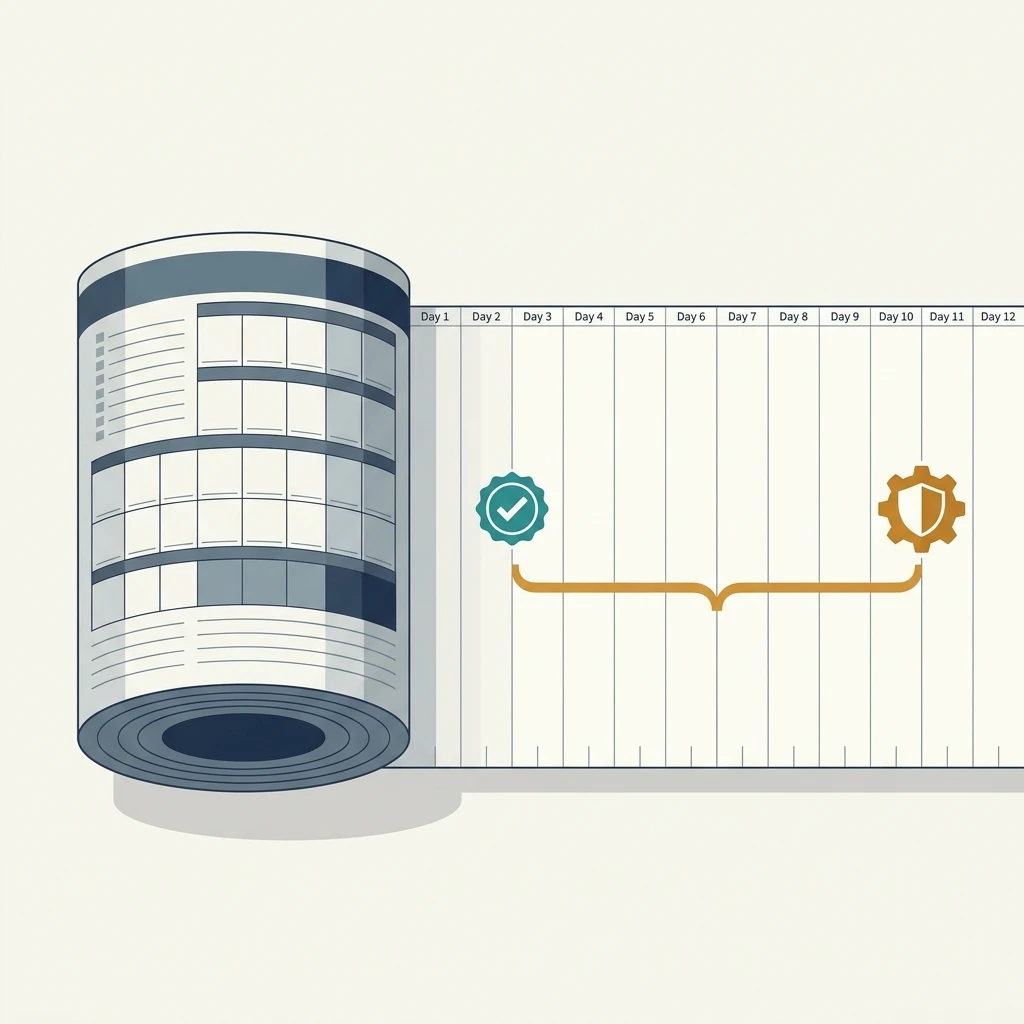
The Technical Debt Behind EHS Software Acquisitions
Private equity bought standalone safety tools and put them behind one login. The schemas never merged. Four failure modes that follow, and four questions to ask in a demo.

Two Clocks, One Implementation
"AI-native, we deploy fast" describes how fast the vendor builds — not your go-live date. That is set by security review, legal, migration, and your own requirements work.

Why Construction Safety Software Fails on Subcontractor Crews
Your subcontractors are not failing to report; the system cannot receive it. Why four dashboard numbers miss trade crews, and the rule: identify the person, not the account.

The Pricing Model That Punishes Reporting
Metering hazard reports puts a price on the behavior a safety program needs most. Why usage pricing fails for human reporting, where it works, and the contract test.

AI OSHA Recordkeeping: Deterministic Compliance via MCP
Two stitches make a cut recordable; a butterfly bandage does not. An MCP server applies 29 CFR 1904 as fixed rules, so the language model only parses the narrative.

Why Enterprise EHS Software Rollouts Fail
Rollout is when every site finally uses the app, so it is when flaws written into the requirements at scoping surface. How to tell a design defect from a genuine rollout problem.

Model Context Protocol: Securing AI Connections to EHS Databases
MCP connects AI to your EHS data — and opens access no one has audited. Six questions that test whether your AI's boundary is real, or just a text instruction in the prompt.

What Does an AI-Native EHS Team Actually Look Like?
Ask an EHS director whose job description changed after the AI rollout. A four-tier diagnostic for whether your team's roles, sign-offs and metrics changed, or only its tools.

The EHS Buyer's AI Prefix Decoder
AI-wrapped, AI-powered, AI-driven, AI-first, AI-native, AI-ready: what each prefix claims about the architecture, the test that checks it, and how to put it in the contract.

Designing a Training Compliance Model That Doesn't Break at the Border
Represent training regulations as data parameters, not custom code per jurisdiction, and keep every record able to answer "what applied then?" A design and a vendor diagnostic.

You Can't Predict What Your Form Never Recorded
Fifteen years of incident data can still miss the events that could have killed someone and didn't. The form never recorded them. Why predictive safety starts with data capture.

Building the Safety Performance IndexTürkçe
An untested leading indicator is a lagging indicator with a confidence problem. How to combine validated metrics into one warning score — with the Excel formulas, a worked example, and the action to take in each zone.

AI Generates Clues. Investigators Write Findings.
An investigation has two phases: gathering clues and writing the finding. AI belongs in the first. The workflow and the software rule that keep it out of the second.

Safety Form Usability: The Friction Budget Method
Every required field beyond what workers can complete honestly turns your safety database into compliance fiction. The Friction Budget quantifies the effort a form demands — and the point at which workers stop reading and start typing anything to submit.

AI Constructs Root Causes. It Cannot Identify Them.
An AI root cause is a hypothesis assembled from other companies' reports. Three structural limits explain why, and three tests to run on any vendor that claims otherwise.

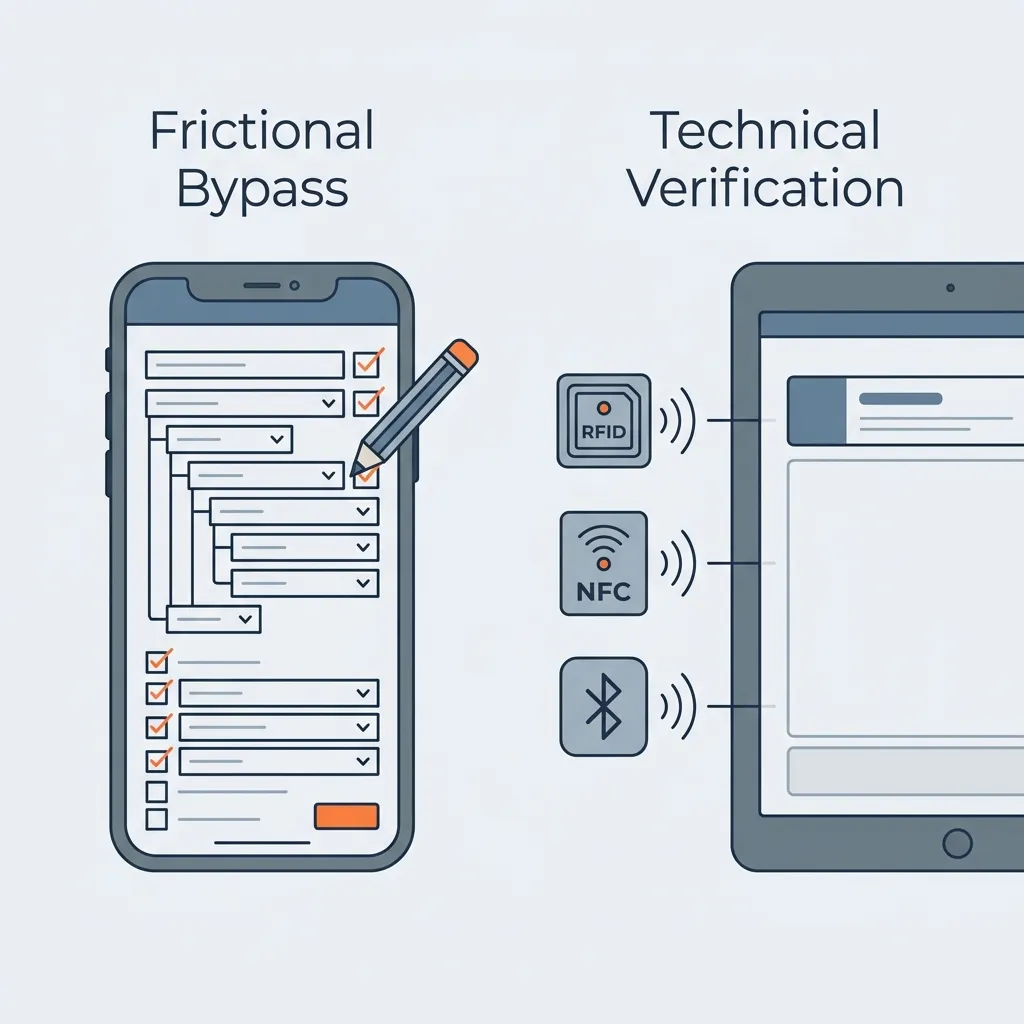
Why Frontline Workers Fabricate Safety Data
Why workers enter fabricated data into EHS apps, and the five technical countermeasures that verify site presence and resolve reporting silos.
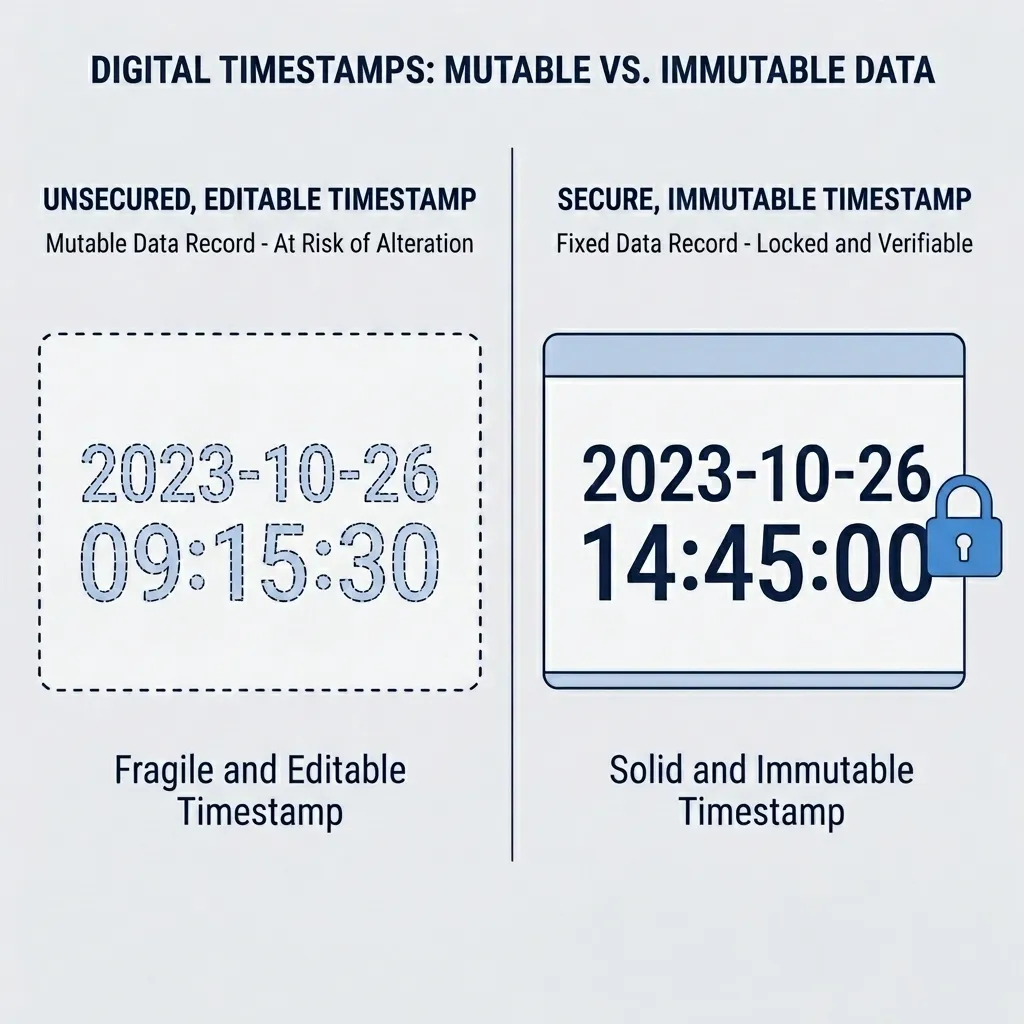
Timestamped Safety Records: Testimony, Not Proof
A record's timestamp is testimony, not proof. Offline sync lets device clocks lie — and the dual-timestamp design that makes records hold up in an investigation.
2026 EHS Tech Consensus: Interrogating the Vendor AI Data
97% claim AI adoption, 5% have it embedded, 85% still use manual tools. Who the 2026 vendor surveys asked, and what their data shows when read side by side.

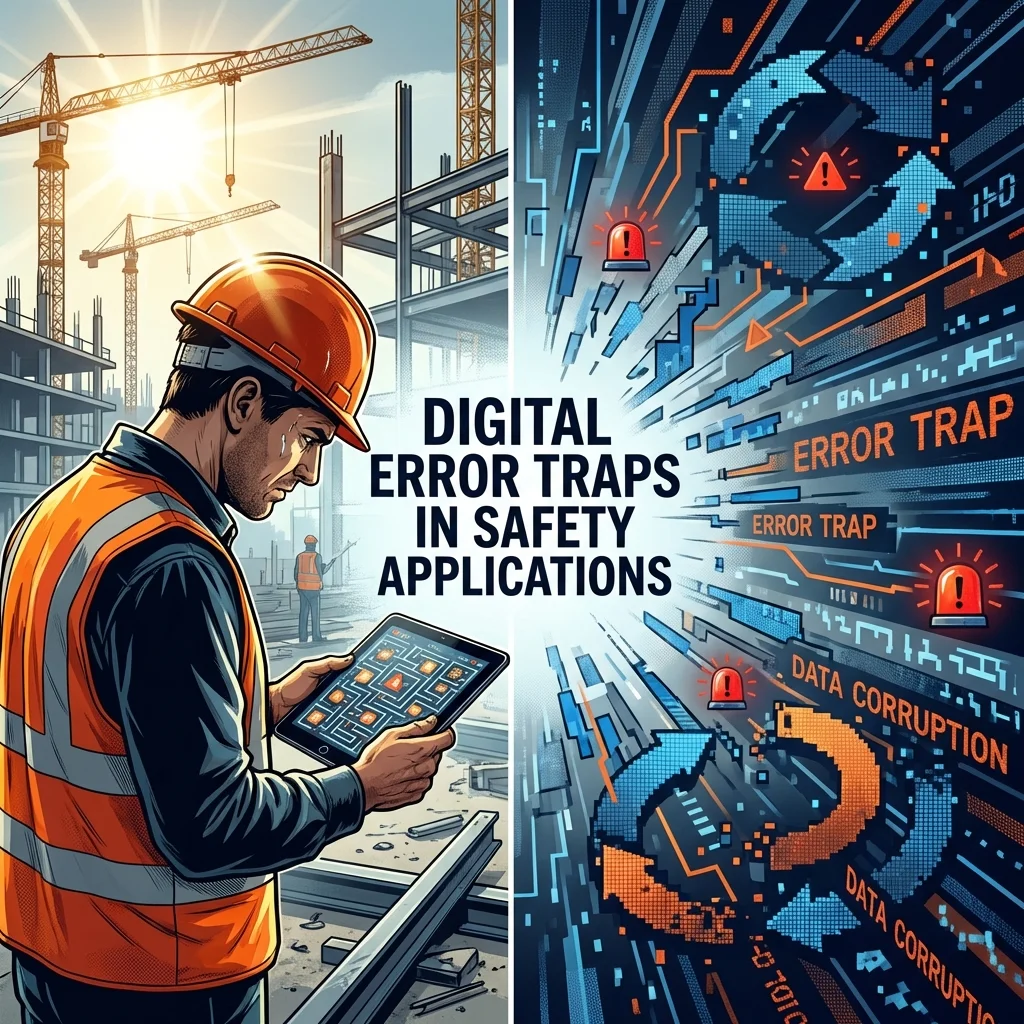
The Digital Error Trap: How Interface Risk Becomes Systemic Failure
Digital error traps don't stay in individual records. They corrupt the data leadership uses to set priorities. What they are and what to do about them.
Validating Leading Indicators: Auditing EHS Data for Predictive SignalTürkçe
Easy to count is not the same as predictive. Lag-correlation analysis on a 36-month dataset classifies each metric as Leading, Forewarning, Concurrent, or Weak.

Structuring Unstructured EHS Data with Targeted Extraction
Incident narratives, audit notes, near-miss reports — none of it is machine-readable by default. Turning unstructured text into schema-constrained, queryable data.

The Feature Trap in EHS Software Selection
Procurement optimizes for feature count. Frontline workers abandon systems that don't fit how they work. Why feature-led selection buys the wrong platform.

The EHS AI Launchpad: Escaping Pilot Purgatory
A working pilot is not a production system. A framework for moving one narrow, high-value AI use case from proof of concept into the daily work of your EHS team.

The EHS Data Refinery: Building AI-Ready Safety Data
Raw EHS data is messy and context-blind. The governance, cleansing, and labeling decisions that turn crude reports into predictive assets.

EHS AI Interoperability: Building the Data Foundation
Predictive safety needs signals from EHS, HR, and Maintenance together. Why siloed data architecture is the actual blocker — not the algorithm.

The AI Readiness Gap: From Hype to High-Value Asset
Three misconceptions behind EHS AI tenders: AI as a feature, collection mistaken for preparation, building instead of growing, and why the data has to come first.

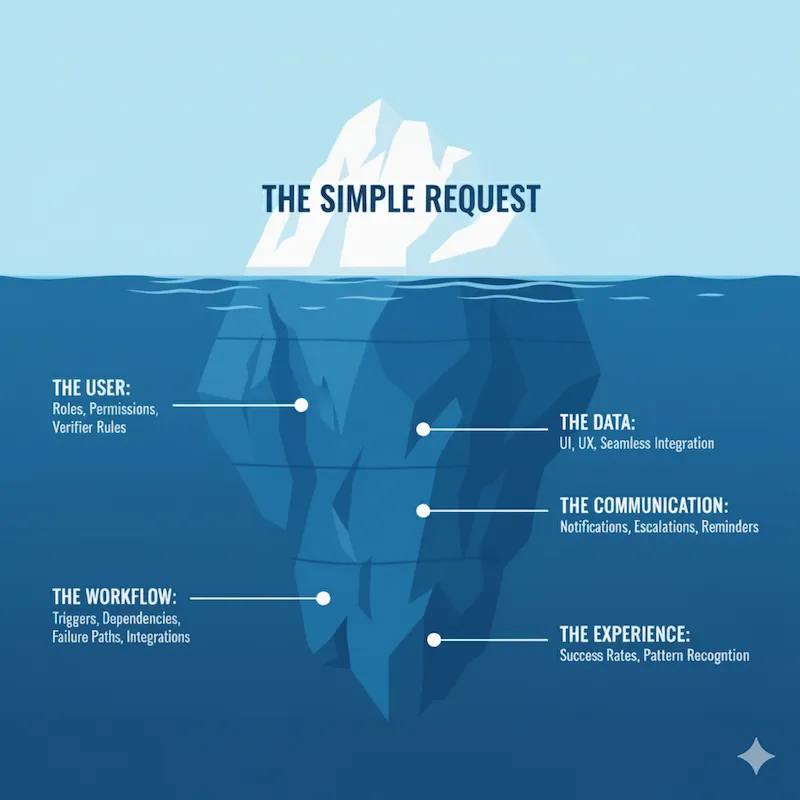
The Requirements Iceberg
Every EHS software request that looks simple conceals architectural decisions nobody documented. Why the visible part of requirements is never the expensive part.
EHS for Enterprises: Strategies for Global Success
Multi-site deployments fail when the architecture is built for one site and scaled by replication. Designing scalability, ERP integration, and governance in from the start.

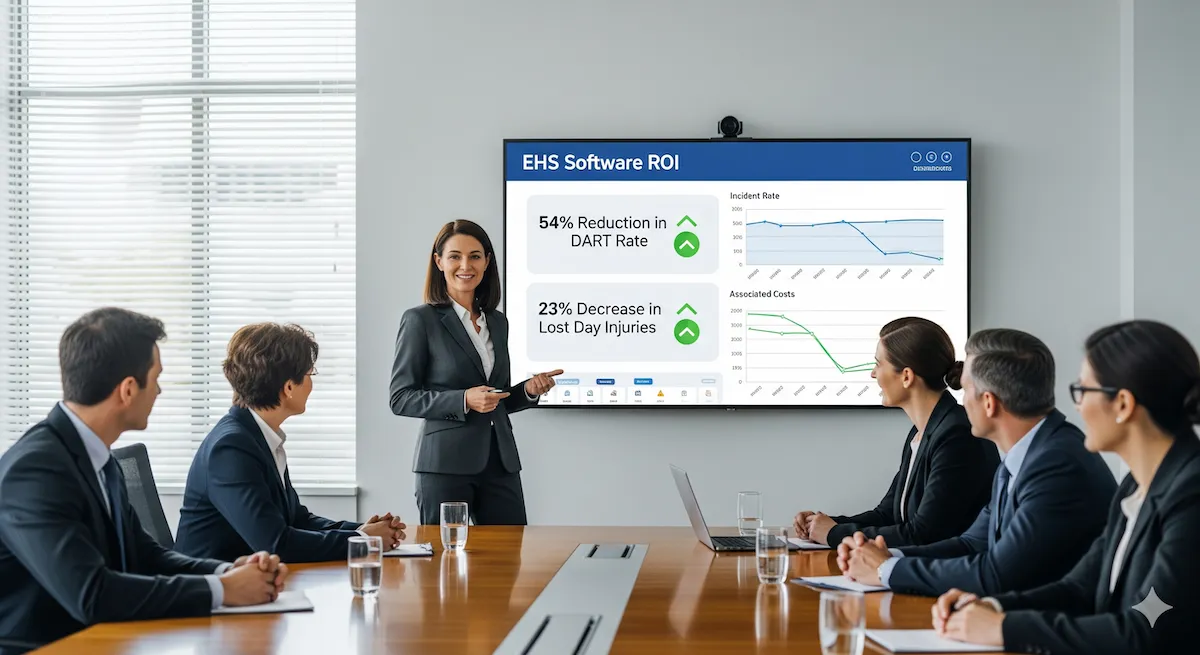
EHS Software ROI Starts Before You Buy the Software
You can't measure the return after you've bought — the baseline is gone. The four numbers to record before you sign, and how to read them after go-live.
Safety Culture Is an Information Design Problem
Safety culture is not a collective mindset modified with coaching. It is the path of least resistance determined by interface usability and administrative burden.

Benchmarking Incident Classification: Logistic Regression, XGBoost, and BERT on 100,000 OSHA Records
Benchmarking Logistic Regression, XGBoost, and BERT across 10 years of OSHA Severe Injury Reports. Why simpler models beat transformers on specific physical sources.
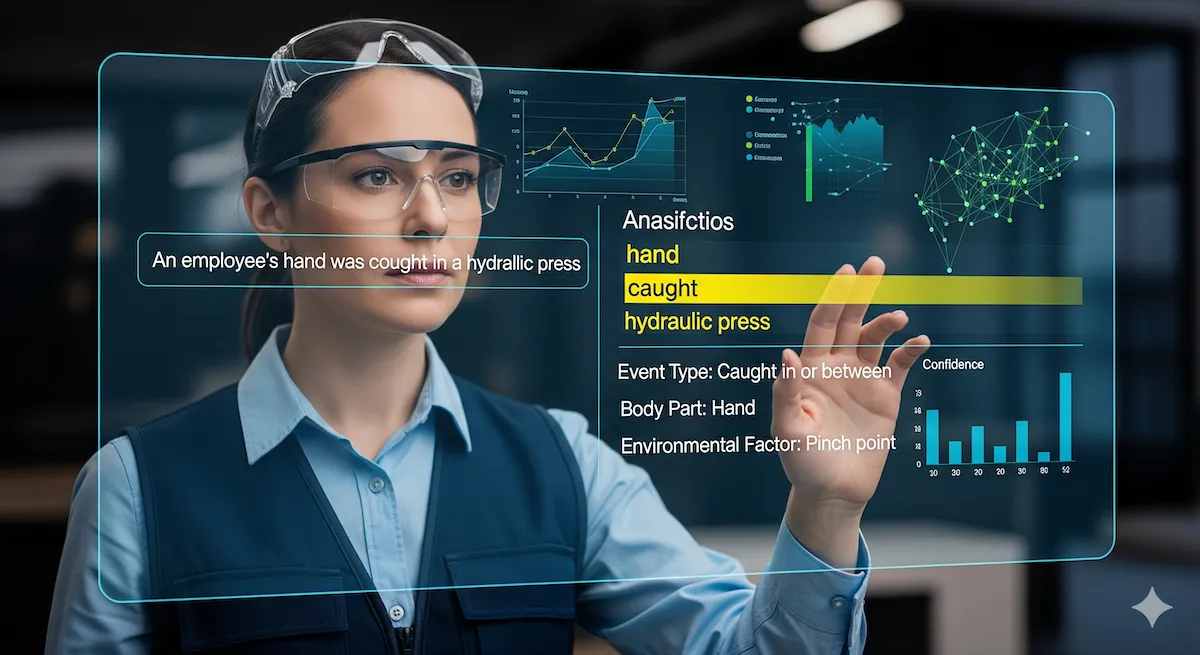
Diagnostic Analytics: Enhancing Workplace Safety
Recording incidents is not analysis. Finding patterns, correlations and root causes across incident data takes a different data model from one built only to log incidents.

A Concise Guide to ESAW Methodology
ESAW, Eurostat's data model for accident records, classifies what deviation occurred rather than who did it, and shows where that level of detail breaks down in field reporting.

EHS Implementation Planning: The Work Before the Contract
The planning phase decides the implementation: mapping how work and records move on site, setting objectives and winning operations' support before vendor selection, not after.
