You Can't Predict What Your Form Never Recorded
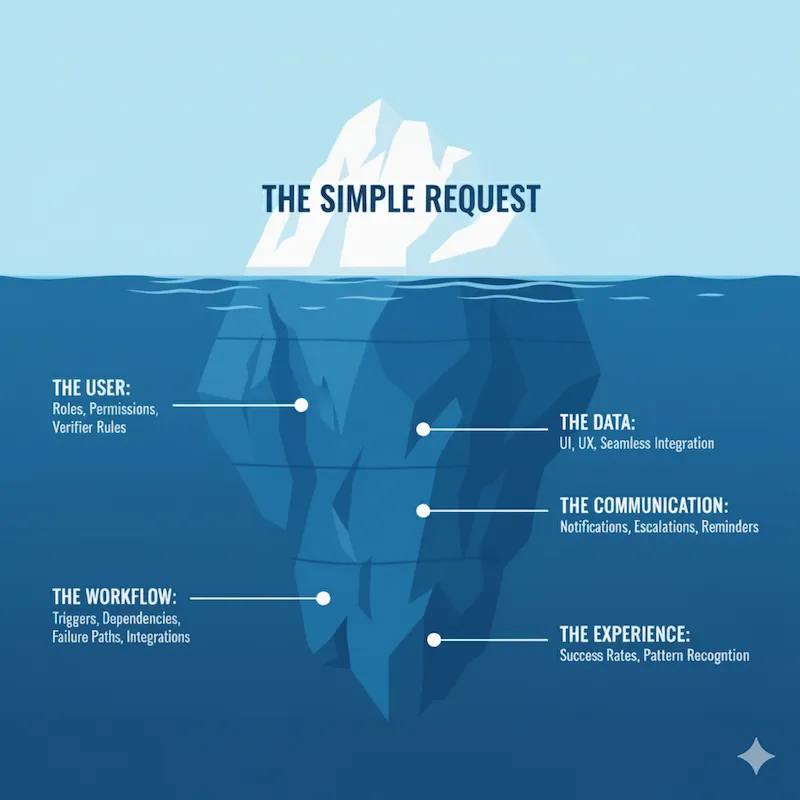
"Can you build a model that predicts our serious incidents?" is the most reasonable request in the building, and the wrong one: the outcome was never recorded as a field.


You have heard the pitch a dozen times: predictive safety gets ahead of the incident. When the company stands up a data and analytics team, you walk over.
"We've got fifteen years of incident data," you tell them. "Can you build a model that predicts our serious incidents before they happen? Flag the high-risk sites, the high-risk crews." It is the most reasonable request in the building. It is also the wrong one.
What you asked for is a model. What you need is a form field.
What the data team finds when they open the file
This sounds like a math problem, but it is actually a data capture failure. The issue is not typical database formatting errors — you can clean up inconsistent dates or correct typos in an Excel sheet. The issue is that the critical facts were never recorded. No algorithm can retrieve an assessment that was never made at the scene.
The thing you want to predict was never written down. You want to predict serious injury and fatality precursors — the events that could have killed someone and, this time, didn't. The slip next to a four-meter drop with no guardrail, not the slip on a flat floor that bruised an elbow. But a precursor is not a checkbox anyone ever ticked. Every standard safety framework — from DEKRA's SIF Potential Indicator to energy-based safety models — relies on the same two facts. First, a high-energy source with the force to kill or maim (like a fall from height, a live electrical line, or a moving vehicle). Second, a direct safety control that was missing or failed. Nobody was asked either question when the report was filed. So there is no column that says "precursor." Before the data team can predict it, someone has to go back through fifteen years of records and decide, one by one, which events qualify. That is EHS judgment. The analysts do not have it. So they either guess, or they quietly swap in something they can actually count — lost-time injuries — which is a different population of events. Now the model will predict the wrong thing, precisely.
The cause is not in the data either. Even if you manually sort and categorize those old reports, the two facts that make an event a precursor — how much energy was in play, whether a control was there — are not fields the model can read. At best, they are scattered through the free-text narrative and classified under standard injury codes designed to describe the wound, not the hazard. A language model can lift some of it back out of the text — but only what the person at the scene actually wrote down. They may have written enough context for an expert to spot a fall from height or an open line, but they rarely logged the voltage or whether the guard was in place. Where the narrative is silent on these details, your data cannot distinguish a near-fatal high-energy event from a minor cut.
Algorithms cannot invent missing history. A predictive model simply projects patterns from the data you feed it. If your database contains no record of the energy levels or control status of past events, the model has no patterns to project. You are asking the data team to predict an outcome you never recorded, using columns that do not contain its cause.
And the target is too rare to model. In thousands of incident reports, actual fatalities and life-altering injuries might number a few. Genuine SIF precursors are far more common, but because the form never recorded them, they remain invisible to the database. The team is left trying to train a model on a handful of severe outcomes. An algorithm can achieve 99 percent accuracy by simply guessing "not serious" for every single record, missing the very serious injuries you built the model to prevent while scoring perfectly.
The model gets built anyway
Nothing stops the project. Because the data team is new and needs a visible win, they proceed anyway — failing through competence rather than incompetence. They do the textbook-correct things for rare, messy data, and they produce exactly what was ordered: a dashboard with a risk score for every site and a healthy-looking accuracy figure on the slide. It demos well. In operation, however, it does one of two things: it either flags nothing that matters, or it floods you with warnings that no one has time to investigate.
You cannot tell a broken model from a working one. You asked for a model and got a score. The score does not carry its own history: it will not tell you the accuracy was won by guessing "not serious," or that the cause was never in the data.
No one lied. You pitched a solution instead of a problem. You asked for a predictive model when the real issue is simpler: your database cannot tell a near-fatality from a paper cut. The data team, hired to deliver, built the solution you named. The actual problem never got said out loud, so no one solved it.
This disconnect between the risk score on your screen and the blank columns in your database is why safety's AI projects stall. The industry survey data shows the gap: ninety-seven percent of companies claim to use AI, but only five percent have it embedded in how work actually runs. The surveys do not ask how: a supervisor using a chatbot to summarize meeting notes is counted the same as a data team trying to predict serious incidents. The gap exists because organizations want the prestige of predictive safety, but the data was never built to answer the question being asked of it.
Three questions to ask before you walk over
You do not need to understand the modeling to stop this. You need to verify your own request the way you would verify a permit. Three questions, answered from your own reporting system, will tell you if the project is ready.
- Is the thing I want to predict recorded as a form field — or is it a judgment nobody captured? If there is no column that already marks the outcome, there is nothing for a model to learn from. Categorizing those past records is a project of its own, and it is your team's project, not the data team's.
- Are the facts that define the outcome captured somewhere in the record — by someone with the judgment to make the call? For a serious injury precursor, that is two facts: the energy involved and whether a control was present. If those live only in the narrative, you are relying on the supervisor to have recorded enough context voluntarily. Where the narrative is silent, no algorithm can recover the facts — and your historical database coverage will be partial at best.
- Do I have enough qualifying events — even after a manual cleanup — to show a pattern? An algorithm needs a lot of examples to find a real pattern. Even if you manually review your backlog and label past precursors by hand, you may only surface fifty qualifying events. If you are working with a training set that small, the model will treat random coincidences as true safety risks. It might conclude that incidents are caused by Tuesdays, rainy afternoons, or a specific contractor, simply because those details happened to overlap in your fifty records. The model will manufacture a pattern just to satisfy the math.
If any answer is no, you do not have a modeling project. You have a data architecture project, and it comes first.
Walk back to your forms first
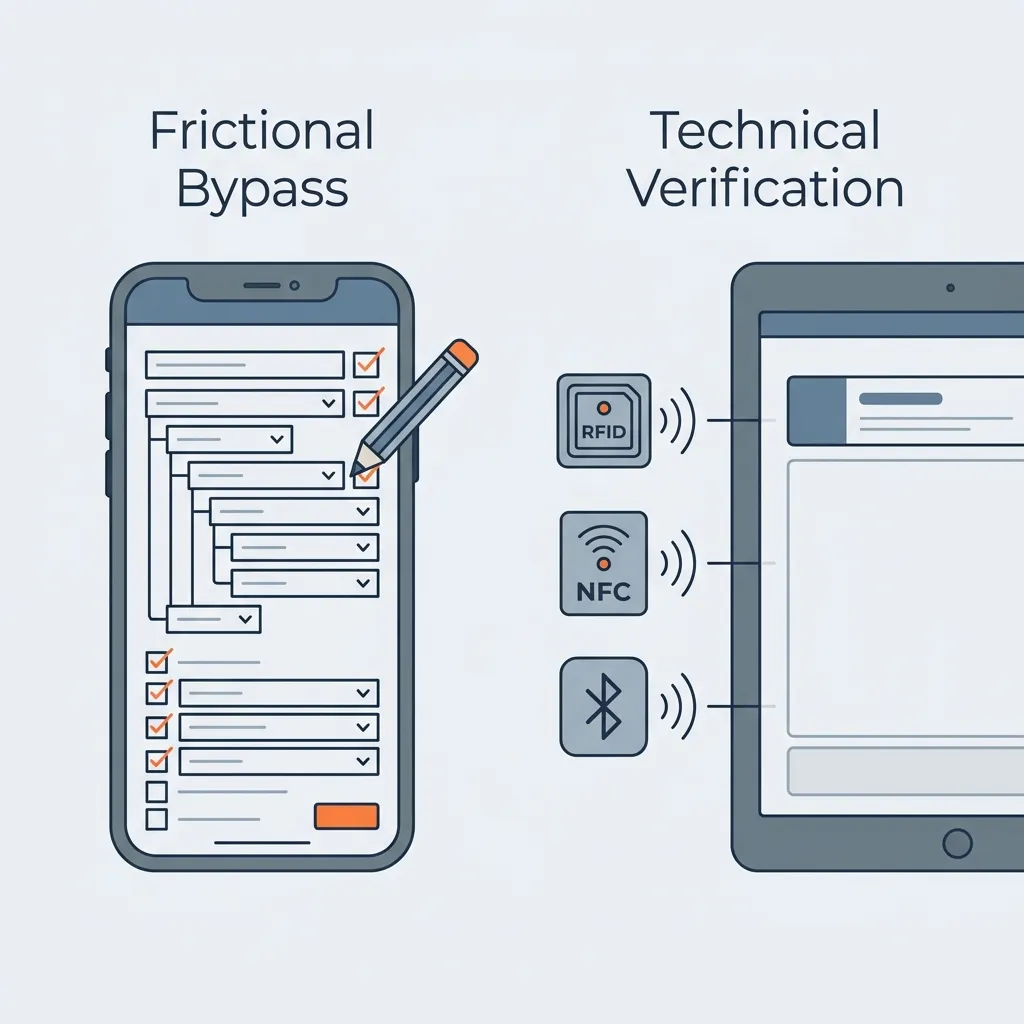
The bottleneck is not the data team's capability — it is the layout of your incident report. Fixing that form is your job, not theirs. Put the new SIF-potential field where review already happens: on the supervisor or investigator who signs off on the report. They must answer two structured questions: was a high-energy source present, and did the direct control hold? This takes safety expertise at the scene, not an algorithm in the cloud.
Do this, and the project changes. Finding SIF precursors stops being a speculative forecast and becomes a simple query: the events your own people already verified as high-energy and uncontrolled. You no longer need a machine learning model to guess which sites are exposed; you can measure it. Tracking the share of high-energy tasks with a direct control in place gives you a live leading indicator. (The tools to do this are already public: DEKRA's SIF Potential Indicator walks users through fifteen exposure categories to make the call, and the company gives it away for free.)
Once your forms are capturing this clean data, you will build up a structured training set over the next few months. Then, you can finally walk back over to the data team and give them a solvable machine learning task: training a model on those new, expert-verified reports to read the free-text narratives of your fifteen-year backlog and classify the salvageable records.
This avoids the small-sample problem because it is a classification task, not a forecast. The model is learning to spot concrete physical indicators a person already described, which requires far fewer training examples than trying to predict a rare future event. The model will not be perfect — it cannot label reports where the supervisor was silent — but it can learn to recognize the clear energy and control indicators your team has now defined. That is a real challenge with its own complications — and the subject for a separate article.
The data team was never your bottleneck. The form was. Predictive safety does not begin with a model. It begins with a database field you were not capturing, and the discipline to add it before you ask anyone to build a model.
Download the briefing slides for your team
A summary explaining why predictive safety fails at the form level and how to restructure hazard data fields.