Safety Culture Is an Information Design Problem
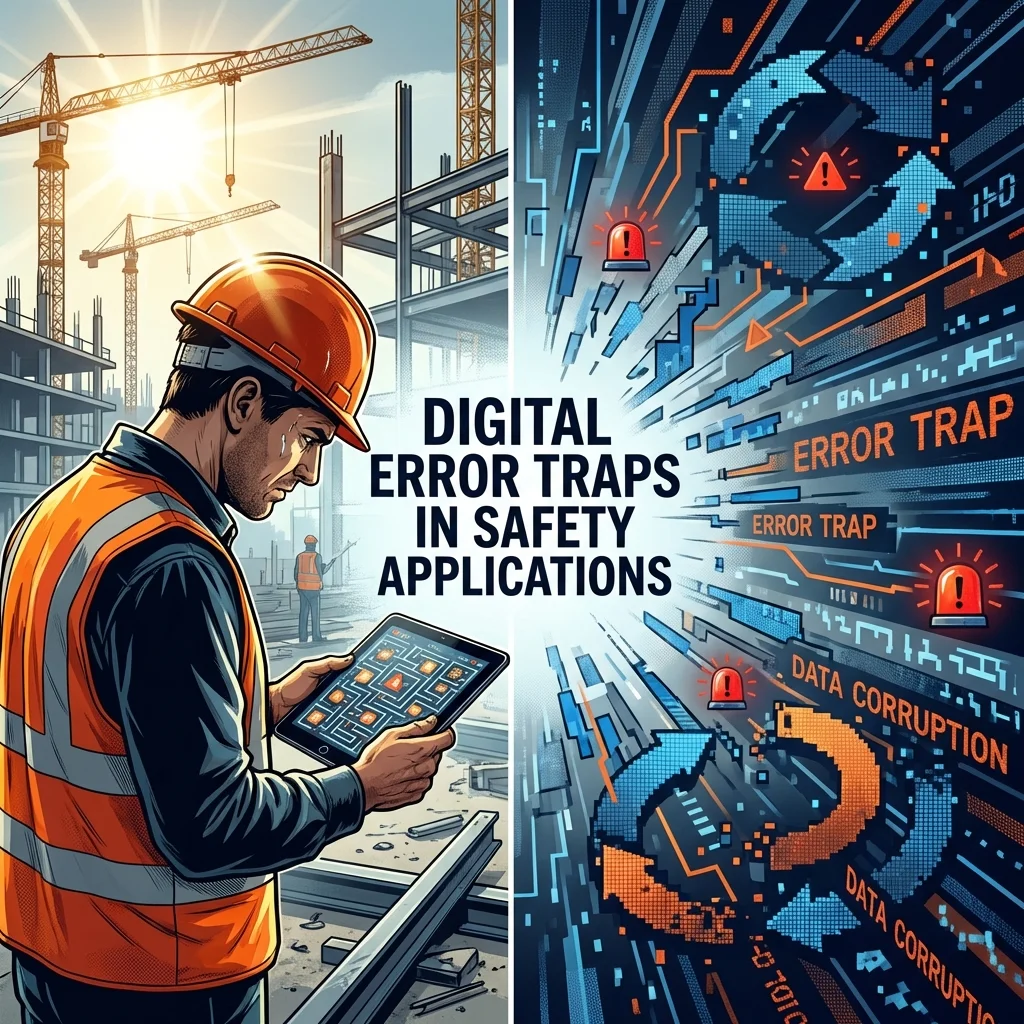
Safety culture is not a collective mindset you modify with coaching. It is the path of least resistance. The culture you observe on-site is the direct output of your interface design.


Buying a software license does not fix operational risk. When software rollouts stall, management rarely diagnoses the interface. Instead, they blame the "human element."
Safety consultants frame low reporting rates as an attitude problem. They sell behavioral coaching and leadership workshops to move the workforce across the DuPont Bradley Curve, from "reactive" to "interdependent." This diagnosis misplaces the problem. While safety culture spans broad operational practices, your reporting culture—whether real hazards actually get recorded in your management system—is not a collective mindset modified with slide decks. It is the path of least resistance. When reporting systems demand too many steps, workers route around them. The culture you observe is the direct output of your information design.
The Path of Least Resistance
Frontline workers make operational choices based on time, physical effort, and immediate consequences. When you deploy EHS software into a production environment, every extra screen and dropdown creates a barrier to reporting.
Consider a site supervisor during a ten-minute shift handover. They spot a damaged scaffold guardrail. They face two immediate options:
High administrative effort: 14 mandatory fields delay the handover; the hazard gets abandoned.
Instant action: preserves the physical handover, but leaves the central database empty.
If the supervisor chooses Option B, the hazard never reaches the central database. At the end of the month, the EHS team runs its report, notes the absence of logged near-misses, and concludes that the facility suffers from a "weak reporting culture." They schedule mandatory refresher training.
The supervisor did not lack safety commitment. They made a rational operational choice: they preserved their limited handover window for physical communication rather than spending six minutes on mobile database entry. The interface design forced that choice.
A simple interface removes unnecessary administrative burden, but it cannot fix a punitive culture where reporting an event triggers disciplinary action or subcontractor contract penalties. When reporting carries personal risk, workers go dark regardless of the software. But when reporting carries zero personal risk, interface complexity determines whether the hazard gets recorded or lost in the field.
Demolishing the Bradley Curve
The DuPont Bradley Curve assumes that safety performance improves as workers internalize responsibility. It treats safety maturity as an emotional and psychological progression.
| Model | Stage 1 | Stage 2 | Stage 3 | Stage 4 |
|---|---|---|---|---|
| DuPont Bradley Curve Attitude Model | Reactive Natural instincts | Dependent Management rules | Independent Individual care | Interdependent Team ownership |
| Information Design Reality System Usability Reality | High Friction Abandoned tool | Medium Friction Pencil-whipped forms | Low Friction Consistent reporting | Zero Friction Honest hazard reporting |
Attitude does not build a reliable dataset. Interface design does. When you make the official logging path faster and simpler than the workaround, submission rates rise. This change looks like a cultural maturation, but it is actually a reduction in form complexity.
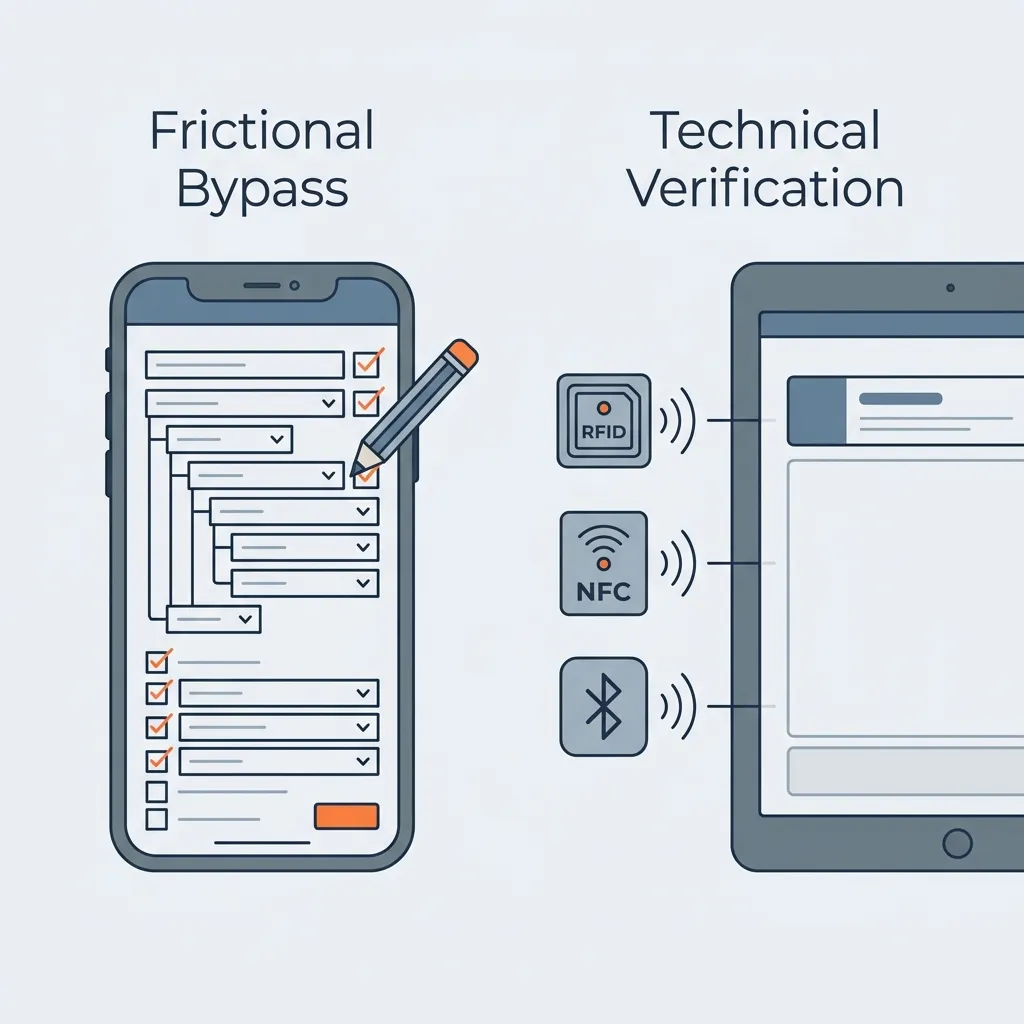
When an interface demands too much effort, workers do not stop working; they pencil-whip the form. They select the first default option just to clear the screen and close the app. The resulting records give executives a clean dashboard while blinding them to actual site hazards.
Designing the Frictionless Path
To fix a drop in reporting, inspect the intake interface before blaming the workforce. Three design rules eliminate unnecessary reporting burden:
- Enforce a strict click budget for objective facts: Measure the exact steps required to log an observation. If submission requires more than three interactions on a mobile device, remove fields. Restrict field input strictly to observable facts—location, asset identifier, and media evidence—eliminating speculative checkboxes that encourage pencil-whipping.
- Separate immediate field controls from administrative classification: Frontline workers execute immediate operational safety controls: stopping unsafe work, locking out energy sources, or barricading a hazard. Never force them to classify an event into ISO clauses or corporate cause codes in the rain. Capture the photograph, the GPS coordinates, and a voice note. Let automated speech tools and central software sort those details into the correct database categories later.
- Design for physical field realities: An interface used on-site must function with gloved hands, remain legible in direct sunlight, and complete within the actual cycle time of the physical task.
You cannot train your way out of a broken interface. When safety software demands more effort than a paper notebook or a direct radio call, workers will always choose the workaround. The missing records are not a compliance failure. They are a design defect.
In our analysis of enterprise rollout failures, we examine how to diagnose why software rollouts stall and how to align technical capabilities with on-site operational readiness.