EHS for Enterprises: Strategies for Global Success
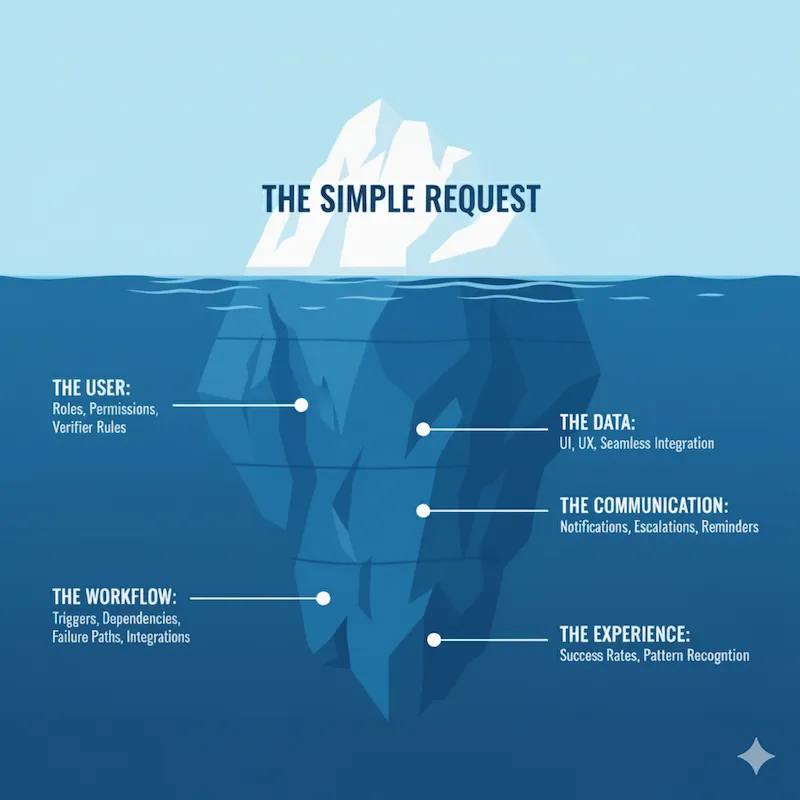
A system designed for one site and copied to every other breaks in three places: scale, the ERP connection, and the gap between global standards and local operations.


We established in Part 1 that EHS software is not a "plug and play" fix. It requires on-site culture, phased deployment, and a clear ROI model. For medium and large enterprises, these foundations are just the starting point. Global operations face a different set of structural challenges—scalability, system integration, and the friction of managing safety across diverse jurisdictions.
Enterprise EHS success depends on how you design for scalability, how seamlessly you connect to the systems that run the rest of the business, and how you achieve a unified view of performance without crushing local operational relevancy.
Global enterprises operate across multiple sites and regions, each with its own regulatory environment and cultural norms. Software for these environments must be inherently scalable — it needs to handle 5,000 users across three continents as reliably as it handles 50 users at one site. This requires a multi-tenant cloud architecture. Think of this like an apartment building: everyone shares the basic infrastructure (the plumbing and electricity), but your data lives in its own private, locked vault that no other tenant can access.
This technical distinction has a physical safety impact. Slow system performance at a remote site is more than an IT lag; it is an "information barrier." If the system is slow, field workers stop reporting near-misses. Architecture that ensures speed across continents is the prerequisite for a system that workers actually use.
Distributed workforces also face communication barriers and "information silos" — where data is captured at a remote site but never reaches the corporate dashboard. To bridge this, you need a centralized platform with mobile access and clearly defined global procedures. The goal is to bring every location under a unified management system that provides real-time visibility into risks, not just a monthly summary of what already went wrong.
For an enterprise, software selection is a strategic decision built on system reliability and APIs (Application Programming Interfaces). An API is a digital bridge that lets different systems share data automatically — like a standard electrical plug that lets any appliance draw power from the grid. Without well-documented APIs, your EHS software stays isolated. This is why IT departments play a critical role in the vetting process; they aren't just checking boxes, they are ensuring the software can survive the complexities of a global rollout.
In global operations, standalone EHS systems create isolated "data islands." Integration with your ERP (Enterprise Resource Planning) and HRIS (Human Resources Information Systems) is not a convenience; it is a strategic necessity. Your ERP is the central system that manages the company's hard assets—money, inventory, and production schedules. Your HRIS is the database of every person in the company. When these systems stay separate, your EHS data remains context-blind.
Connecting these systems delivers immediate physical benefits. When your HRIS pushes role updates to your EHS system, a new hire in the warehouse is automatically assigned the correct safety training based on their role. When your ERP sends asset status to your EHS system, a machine flagged as "out of service" for maintenance can instantly trigger a hazard alert to any worker attempting to open a permit in that area. This automation removes the manual work that leads to errors and ensures that safety is embedded in the operational reality of the site.
However, this integration is not just a technical bridge; it is a data-governance challenge. Bridging EHS data with personnel records requires strict privacy protocols (such as GDPR compliance) to ensure that sensitive medical or disciplinary data remains protected while still informing risk decisions.
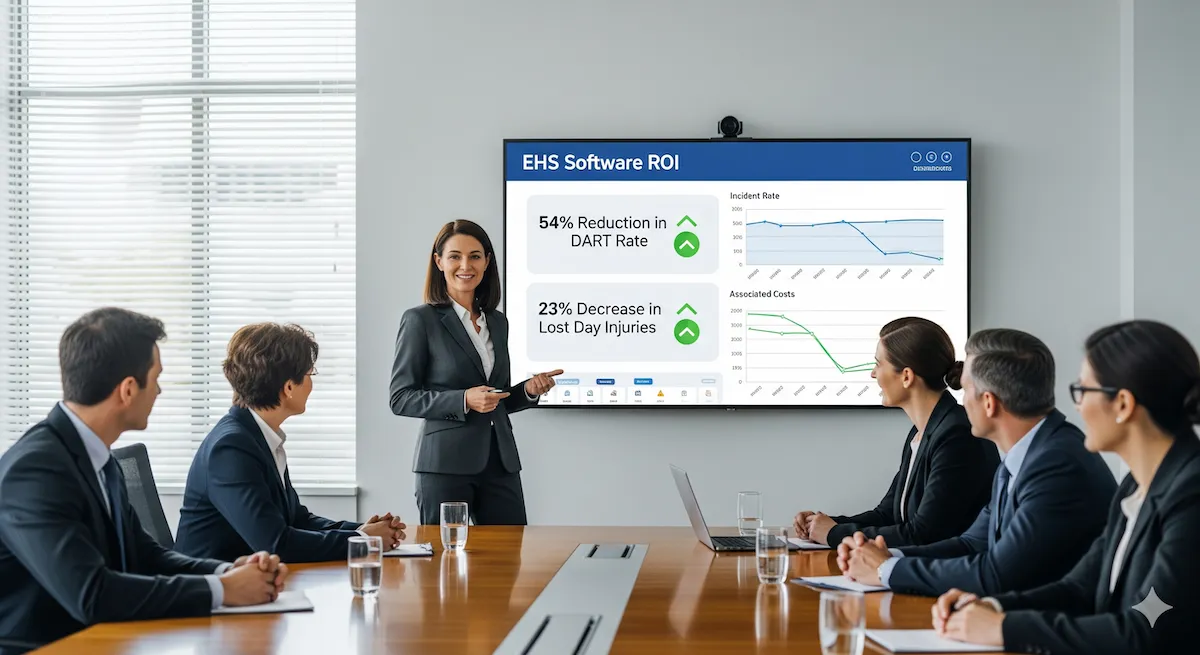
Moving from siloed compliance to an integrated data model changes how the C-suite views safety. When EHS data is linked directly to the ERP, the board stops looking at lagging incident charts and starts looking at predictive risk models tied directly to production schedules. Safety is no longer a separate cost center reporting its own isolated metrics; it becomes an integrated layer of operational reality.
Global operations require a central architecture to identify risk patterns across borders. If a hazard causes a near-miss at a facility in Germany, a centralized system ensures that same hazard profile instantly triggers inspection alerts at a sister facility in Brazil. You consolidate global data not to generate more reports, but to deploy localized fixes at scale.
However, standardization must be balanced with local operational relevancy. A rigidly standardized system that ignores regional regulations or cultural norms will face user resistance. If the global system is slower or more complex than a local spreadsheet, workers will revert to "Shadow IT" — unofficial tools that hide the very risks leadership is trying to manage. The goal is to provide a global framework that is useful enough locally that sites abandon their spreadsheets.
Achieving this requires distinguishing between Standardized Reporting (the "blurry" aggregate data needed for the boardroom) and Local Risk-Sensing (the high-resolution signals needed for site safety). A truly effective enterprise system supports both, ensuring that global visibility does not come at the cost of losing the "weak signals" that precede an incident.
For large organizations, EHS software is the infrastructure that connects field reality to corporate strategy. By designing for scalability, integration, and local relevancy from the start, you move beyond simple compliance and build a system that actually captures the true risk profile of the business.
One final rule: automation is not the same as safety. While an HRIS integration ensures the process of training assignment happens, it does not replace the on-site verification of competence. Technology is the scaffolding for safety, but the "human element"—the supervisor who verifies that a worker actually understands the risk—remains the owner of the outcome.