The Technical Debt Behind EHS Software Acquisitions
A forklift strikes a cable tray, and the incident module cannot check the operator's certification: it tracks badge numbers, while the acquired training module tracks email addresses.


A forklift operator strikes an overhead cable tray in a distribution center. When the site safety manager opens the incident management system to complete the investigation, the software cannot verify whether the employee holds a current equipment certification. The incident module records workers by facility badge number. The newly acquired training management module tracks workers by corporate email address. Because the vendor patched the two systems together with a single sign-on screen instead of a unified database, the software cannot answer a basic question across both records automatically: is this badge number the same person as this email address? The safety manager has to open a separate tab, search the employee's name, and manually copy training completion dates into the incident record.
When customer software fails to sync, a marketing email goes out late. When safety software fails to sync, an uncertified worker is cleared to enter a high-voltage substation or a confined space. In heavy industry, disconnected software does not just create administrative delays; it creates physical danger and legal liability.
Enterprise safety software vendors rarely build their entire product suites from scratch. Between 2019 and 2024, the EHS software market consolidated through aggressive private equity buyouts. Multi-billion-dollar deals—including Blackstone acquiring Sphera for $1.4 billion, Hexagon acquiring ETQ for $1.2 billion, and Hg Capital acquiring Ideagen for £1.05 billion ($1.28 billion)—concentrated dozens of separate products under a few parent companies.
Instead of writing unified code, buyers acquired standalone tools: electronic permit-to-work systems, contractor pre-qualification portals, chemical registries, occupational health databases, and e-learning platforms. Sales teams market the result as a unified platform, taking advantage of buyers who evaluate software by ticking feature checklists rather than inspecting data architecture. In practice, the customer receives a collection of separate tools wrapped in a shared navigation bar and matching visual color scheme.
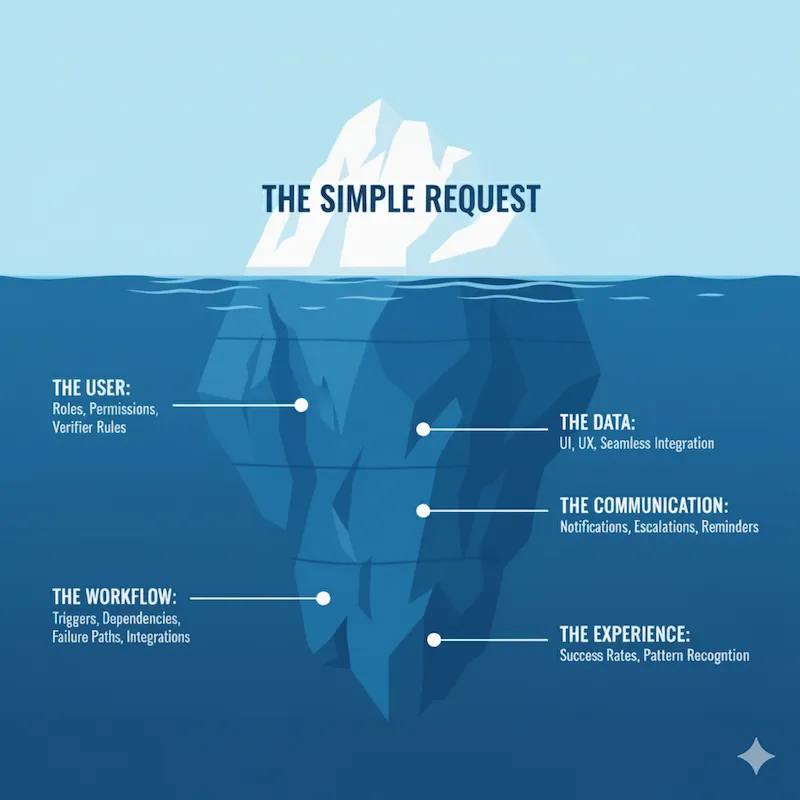
The vendor has not integrated the software. It has forced your site safety team to manually bridge the gaps between disconnected tools—the hidden mechanism behind enterprise EHS rollout failures.
The Single Sign-On Illusion
Single Sign-On (SSO) authenticates identity; it does not unify data models.
When a vendor pitches an integrated suite, the demonstration begins with a shared login screen. You enter your credentials, land on a branded portal, and switch between modules using a top navigation bar. To a procurement committee in a conference room, this looks like a single system.
Behind the browser interface, the data architecture remains fragmented across legacy schemas. A schema is the fixed structure a database uses to store a record—which fields exist, and what identifies a match. Two modules with different schemas are like two spreadsheets tracking the same worker under different column headers, unable to recognize each other's row:
| Acquired Module | Target Entity | Database Identifier | How Identity is Captured on Site |
|---|---|---|---|
| Incident Management | Frontline Worker | badge_id: "88219" | Scanned at the physical plant turnstile or gate. |
| Training (LMS) | Frontline Worker | email: "j.doe@contractor.com" | Logged via corporate email desktop login. |
| Permit-to-Work (PtW) | Frontline Worker | pass_no: "PTW-0042" | Issued as a temporary shift authorization pass. |
| Occupational Health | Frontline Worker | medical_id: "MED-4910" | Isolated in a confidential medical record database. |
The issue is not whether a modern vendor splits its software into separate services running on separate databases—most well-built cloud software does exactly that. The issue is whether those services stay in sync. A well-engineered system updates every service within milliseconds of a single change, because every service reads from one shared source of truth.
An acquired software portfolio does the opposite. It glues separate databases together using scheduled batch sync scripts that run once an hour or at midnight. When those scripts fail, lag behind site activity, or run into mismatched fields, site operations stall.
In a genuinely unified platform, every module respects a single master list of workers, facilities, contractors, and equipment—not four separate lists that happen to look alike. Strict database rules ensure that an incident report cannot link to a ghost record: the asset, permit, or worker must exist in the master system before the form can be saved.
Five Incompatible Domain Schemas
Standalone EHS tools are built around fundamentally different database designs. Stitching them together without rebuilding the underlying data structures means your tools cannot share information without manual workarounds:
| Acquired Tool | What the Database Stores | Why Data Links Break on Site |
|---|---|---|
| Electronic Permit-to-Work (PtW) | Spatial zone, isolation tag, valid time window | Built for real-time gate access; stalls when worker qualification records reside in a delayed sync database. |
| Contractor Pre-Qualification | Tax ID, corporate legal entity, insurance policy | Built for corporate procurement liability; has no direct link to physical equipment registries or line-level work orders. |
| Chemical Safety & SDS | CAS registry number, GHS hazard classification | Built for chemical inventory compliance; isolated from plant machinery registries and historical incident logs. |
| Occupational Health | Patient medical ID, audiometric baseline, clinical restriction | Built for clinical privacy; completely segregated from daily shift rosters and operational task assignments. |
| E-Learning & LMS | Course ID, corporate email address, transcript timestamp | Built for corporate desktop users; cannot map to physical RFID security badges or gate turnstiles used by shift workers. |
Four Operational Failure Modes
When an EHS platform relies on disconnected database designs, the underlying flaw breaks daily site operations and reporting:
1. The Delayed Database Sync
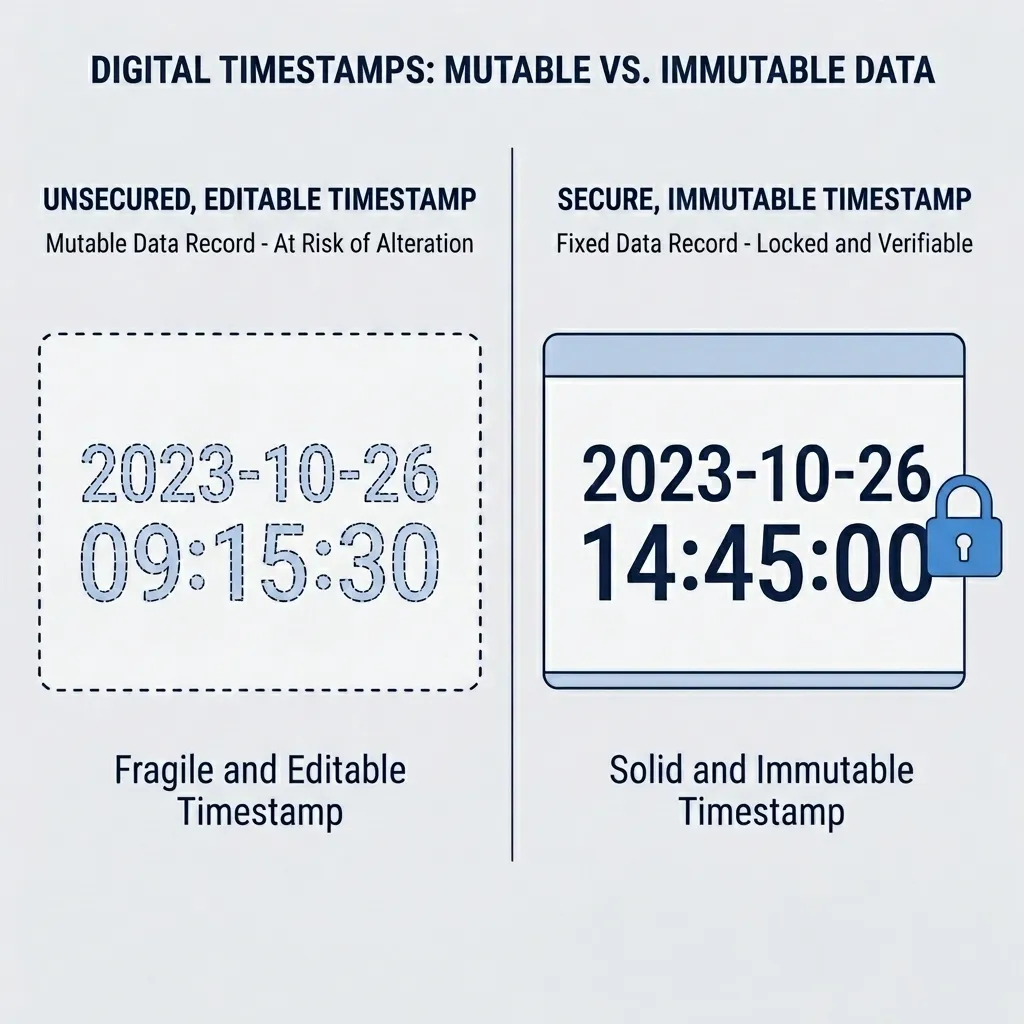
A contract welder completes required site orientation at 07:30. The permit-to-work module verifies worker qualifications against the orientation database. If the vendor relies on a scheduled script that syncs records once an hour or overnight, the permit system shows the welder as unauthorized at 08:00. The site supervisor faces a bad choice: halt a critical maintenance turnaround while waiting for the database to update, or bypass the digital permit check. Bypassing the check breaks the audit trail the system was bought to enforce.
2. Mismatched Facility Hierarchies
The incident reporting module organizes operations by physical plant structure: Site → Building → Floor → Machine Line. The acquired chemical inventory module organizes facilities by environmental reporting zones. The contractor portal organizes locations by corporate billing address. Because the modules do not share a master list of locations, a chemical release logged in the chemical module cannot automatically link to the machinery asset in the incident module—and contractor safety performance cannot be mapped to the production lines where contractors actually work.
3. Free-Text Error Traps
When software modules do not share direct links between their database records, forms cannot pull verified options from a master list. Instead of selecting an asset from an approved registry dropdown, the incident form falls back to an unvalidated text box. One worker types "Forklift #4," another inputs "FL-04," and a third writes "Toyota 4." The system cannot run automated trend analysis on specific equipment because the database stores each entry as a completely different text record.
4. The Reporting Wall
Vendors showcase cross-module dashboards during sales demonstrations. In an acquired suite, each module's data lives in its own isolated database—sometimes on completely separate cloud servers. The reporting engine cannot run a direct query across them. To generate a standard metric—such as injury rates broken down by contractor pre-qualification score—the system forces you to export raw Excel files or buy add-on connectors for external reporting tools. Your safety team spends hours manually cleaning and stitching data in spreadsheets to resolve database gaps the vendor never fixed.
The Private Equity Lifecycle: Why Debt Persists
Consolidating ten software contracts into a single vendor lowers procurement overhead. It simplifies invoicing, streamlines master contracts, and cuts administrative hassle for corporate purchasing.
However, saving hours in the procurement office is poor economy when safety professionals spend hundreds of hours manually reconciling mismatched spreadsheets in the field.
Private equity buyers do not leave these database gaps unfixed by accident. They leave them unfixed because of how private equity exits work. A fund typically holds a software company for three to five years before selling it to the next buyer. Rebuilding several acquired databases into a single master data model requires millions in engineering payroll over multiple years—an expensive overhaul that adds zero new features to sell on a demo.
While treating EHS software as operational infrastructure protects long-term data integrity, that engineering effort generates zero immediate recurring revenue (ARR) growth for an investment fund. Instead, management teams prioritize commercial packaging: harmonizing user interface skins, setting up SSO login screens, and packaging modules into cross-sell bundles where modular pricing decides which safety records connect.
The strategy is visible in public transaction data: platforms like Ideagen executed more than twenty add-on acquisitions before flipping the portfolio to Hg Capital for £1.05 billion; Alcumus was acquired by Apax Partners after rolling up four compliance tools, only to spin its software assets into EcoOnline shortly after. The commercial goal is to package the portfolio for the next buyout before unaddressed technical debt becomes impossible to hide.
None of this requires inside knowledge of any single vendor's codebase. The pattern is visible in the deal structure itself: acquire the standalone tool, brand it into the suite, and defer the database work.
When enterprise customers complain about disconnected workflows, vendors often suggest bridging the gaps with third-party middleware or custom API connectors. But connecting two incompatible data models through middleware does not unify them; it merely exports the vendor's integration debt onto your internal IT budget.
After 2022, buyouts shifted to larger suite-on-suite mergers (such as Ideagen acquiring ProcessMAP) and sustainability (ESG) add-ons (such as Cority acquiring Reporting 21, or Sphera acquiring SupplyShift). This introduced a deeper data split: corporate sustainability tools track carbon emissions and supplier surveys around legal entities and utility meters, while safety tools track work around physical machinery and shift rosters. When corporate leadership asks for a unified facility-level ESG report, the software cannot link utility account data to line-level equipment records.
The AI Copilot Illusion
The rise of generative AI has added a new marketing layer over this database debt. Vendors now promote natural-language search tools and "AI Safety Copilots" designed to summarize risk across their suite.
These tools rely on Retrieval-Augmented Generation (RAG), querying underlying databases to provide context to an AI model. When those databases lack connected schemas, the retrieved context is fragmented: the AI pulls the incident report but misses the disconnected training record, hallucinating a connection or falsely reporting missing training it never actually checked for.
Software vendors argue that semantic search and AI text matching eliminate the need for clean database structures by linking records based on textual similarity. That logic works for marketing recommendations or customer service chatbots. It fails in occupational safety.
In an OSHA inspection or fatality investigation, an AI's probabilistic guess connecting a worker badge ID to a training record is legally indefensible. Regulatory compliance requires exact, auditable proof. If the underlying data architecture cannot prove, record by record, that a specific certified operator, active permit, and machinery asset are linked, the AI output is legally unusable. An AI interface cannot fix a broken database model.
The 4-Question Demo Audit
Corporate Procurement and IT will clear an enterprise safety platform because single sign-on works, billing is consolidated under one invoice, and the SOC 2 security certificate is valid—proof the vendor protects data from outside breaches, and nothing more. But IT does not investigate incidents when a worker is injured, nor does IT face the inspector when an audit trail breaks. Your safety team must audit the data architecture directly. Bring your IT counterpart into the room: the operational questions belong to safety, even if IT runs the queries.
Run these four tests during a live sales demonstration:
- The Real-Time Record Test: Have the sales engineer create a new asset or worker profile in core settings. Immediately switch to the incident module and try to link a report to that new entry. A delay of one or two seconds is normal search indexing. But if the entry remains missing until someone clicks a manual "Sync" button or waits for a batch integration job, the tools run on separate databases.
- The Database Map Check: Ask for the database blueprint—the Entity-Relationship Diagram (ERD) or data schema map—showing how incident records link directly to permit and contractor data (via relational tables or document collection IDs). If the vendor claims the layout is confidential or provides separate diagram sheets for each module with no connecting lines between core entities, the platform was assembled from acquisitions.
- The Location Update Test: Change the name of an operating unit in core settings. Open an existing permit or past incident at that unit. In a unified system, modules reference a central location ID, so updating the master name reflects across the platform. If the old name remains in other modules, or if the system creates duplicate location entries, the tools use separate location lists or unlinked document copies.
- The Developer API Check: Software tools use APIs (Application Programming Interfaces) to exchange data. Ask for developer API documentation for two modules (such as incidents and training). Compare their web addresses, login rules, and date formats. Differences in login rules or date formats (like 10-digit numeric timestamps in one module and standard calendar dates in another) prove the modules run on separate codebases.
Buy Architecture, Not Brand Logos
When a software vendor buys standalone tools without rebuilding the underlying database, it protects its profits by leaving disconnected code in place.
When you evaluate an enterprise EHS platform, look past the matching logos and the shared login screen. If the vendor cannot prove their tools share a unified database during sales demos, your safety team will spend years re-entering worker details, copying data between forms, and fixing broken reports by hand.