Module Pricing Decides Which Records Connect
Where EHS modules are sold one at a time, the cut is made from a price list that does not show which links between records each module carries.

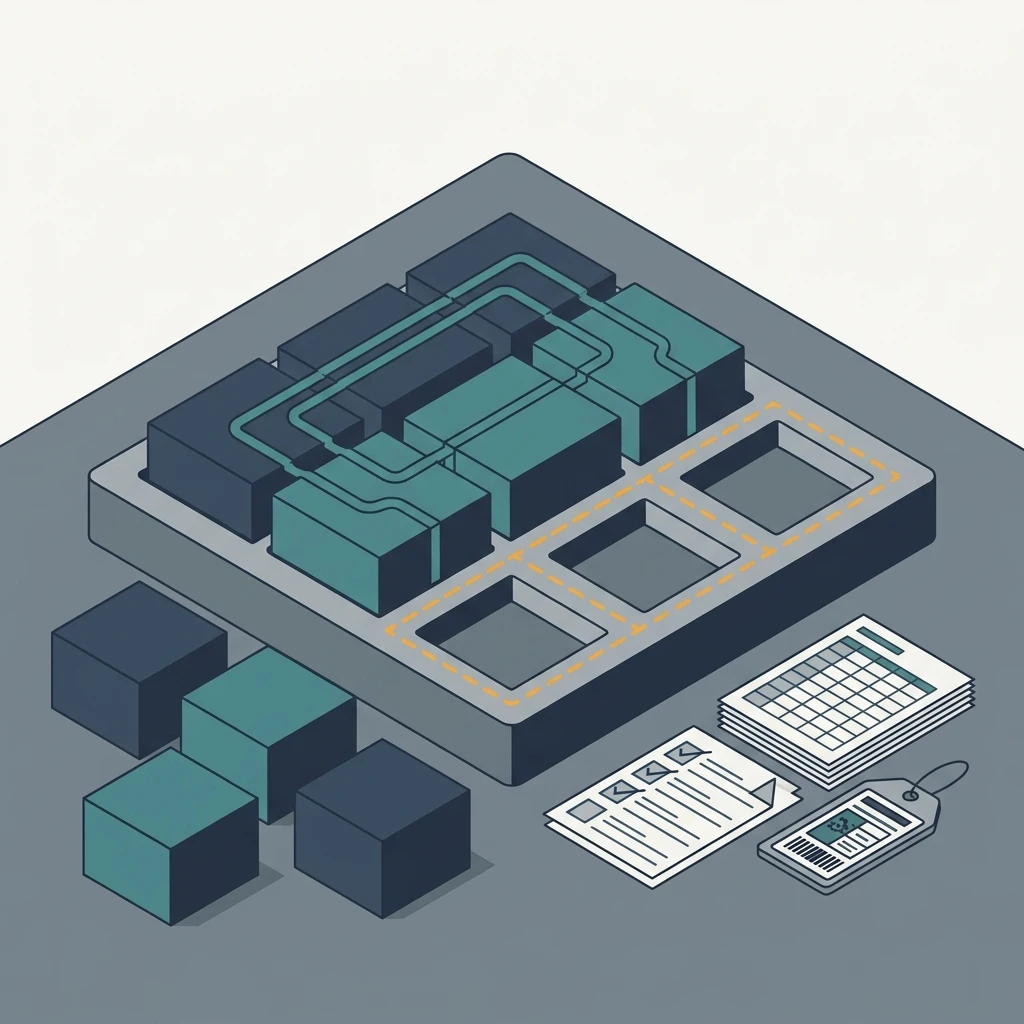
The modules you can afford decide which records your system can connect. When you skip a module, the work it would have recorded still happens. Its records move into spreadsheets, inboxes and other systems, where the EHS platform has no link to them.
Where modules are sold one at a time
EHS vendors sell modules in packages, one at a time, or both. Where they are sold one at a time, risk assessments, management of change, training and document control can each be a separate line on the bill, and the risk register can be priced apart from the assessments that feed it. Public price lists show both.
Modular pricing is not a trick. It lets a buyer start small and add scope later. The problem is how the cut gets made. A budget holder reading a price list decides which modules to drop. The price list does not show which links between records each module carries, so the cut is made without them. The budget holder can read the price of each module. Only you know which records an investigation, an audit or a permit needs, so the cut needs your answers before it is made.
What a skipped module takes with it
A site replaces the guard on a press with a different design. The site did not buy the Management of Change module, so engineering approves the change by email and logs it in their own spreadsheet.
A few months later, an operator's hand is caught at the same press. The investigator opens the incident record. The system shows the machine, the operator and the time. Nothing shows the new guard, because the record of it was never in the system.
Whether anything changed is a standard question in a root cause analysis. OSHA and EPA guidance lists it: "Were there changes in conditions, processes, or the environment?" Here, someone has to remember the answer. If nobody does, it is never considered.
The software did not fail. It was never given the record.
The same can happen one level up, where a vendor sells the risk register apart from the risk assessments. Risk assessments identify hazards and controls site by site. The risk register ranks and tracks those hazards across the company. Buy the assessments without the register, and someone rebuilds the register in a spreadsheet whenever the company-wide view is needed, by copying from the assessments. The copy is out of date from the day it is made. A control marked complete in an assessment still shows as open in the register until the next copy.
Adding the module in year two does not bring the history with it
A module bought later links the records created after it goes live. The records kept outside before then link only if someone imports them and matches every name to the platform's lists. Even then, the import recovers links through shared equipment and dates, not the links a person made at the time, such as which change an investigation considered.
The engineering spreadsheet does not use the platform's asset list. It says "Press 4" in one row and "P-04" in another, so importing it means matching names by hand. Matching tools, AI among them, can propose that "Press 4" and "P-04" are the same press; someone who knows the site still has to confirm each match. That is the same free-text mismatch that breaks the link between a permit and the equipment it covers.
Connecting the outside system instead costs an integration fee. An integration moves records between systems. It only makes them linkable if both sides identify the press, the person and the site the same way. A reporting tool that joins the spreadsheets to the platform needs the same thing. Where they don't, you get the same gap acquired suites leave between their own modules.
Price the links, not the modules
Before you cut a module from a quote, answer three questions about it:
- Which records in the modules you are buying need to link to records in the module you would cut? An incident links to recent changes, to the operator's training, to the procedure in force on the day. A risk assessment links to the company-wide register.
- Where will the cut module's records live instead, and what identifies them there? A spreadsheet, an inbox, or another system such as maintenance or HR? Do they use the same equipment tags and employee numbers the platform uses, or different names?
- When someone needs that record, who checks the outside copy, and how would they know to?
If the first answer names any record you are buying, the link is not optional. Keep it by buying the module, or by connecting an outside system that uses the same identifiers; otherwise that record is stored where nothing can reach it. If the answer is none, you can cut the module without losing a link.
If you keep it, one more question decides whether buying it gives you the link:
- Does it use the same equipment and person lists as the other modules you are buying? Ask the vendor to show two linked records on the same piece of equipment, such as an incident and a change on the same press. In a suite built from acquisitions, two modules from one vendor can name the same equipment differently.
What links to five modules you might cut:
| Module you would cut | Records that link to it | What is lost without the link |
|---|---|---|
| Management of Change | Incidents; risk assessments | A recent change as a candidate cause; the reassessment a change should trigger |
| Training Management | Incidents; permits; task assignments; corrective actions | Whether the person was qualified on the day to do, issue or sign for the work; whether retraining set as a corrective action was completed |
| Document Control | Incidents; audits; inspections | Which version of the procedure the crew worked to, or the auditor checked against |
| Risk Register | Risk assessments | Whether the hazard was already known and ranked elsewhere in the company |
| Occupational Health | Incidents; noise and chemical exposure records | Whether a known restriction was followed; whether health checks match the exposure measured |
Phase by site, not by module
Build the module list from the links your records need, then price it.
If the budget cannot carry every module at every site, you can start smaller in two ways: fewer modules at every site, or every linked module at fewer sites first. Fewer modules breaks the links at every site from day one. Fewer sites keeps the links whole where you start, while the other sites keep their current system until they join. The cost is a company-wide view split between the platform and the old system until the last site joins.
Phasing by site only saves money if the price falls when fewer sites or fewer employees are covered. On a list tiered by company-wide headcount, it may not, so ask before you plan around it.
Either way, the records from before come in as a legacy import, the same matching work for a late site as for a late module. The difference is what you have in the meantime: complete, linked records at five sites, instead of records at forty that cannot link to each other.
How each line on the bill grows as you add sites, users and modules is covered in How EHS Software Pricing Scales.
A price list sorts your safety records into the ones you can afford to connect and the ones you can't. Make that cut with those links in mind, because the day someone needs a missing link is the day you find out which cut you made.